Share
Save
Ready
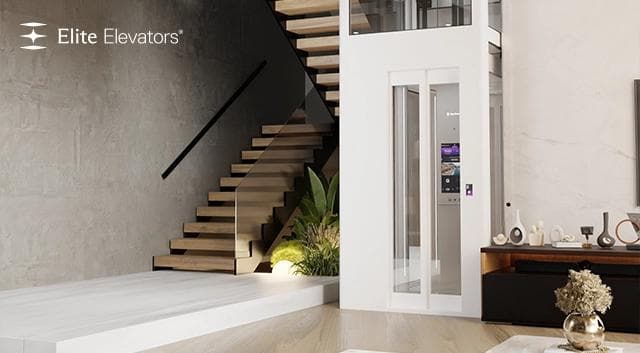
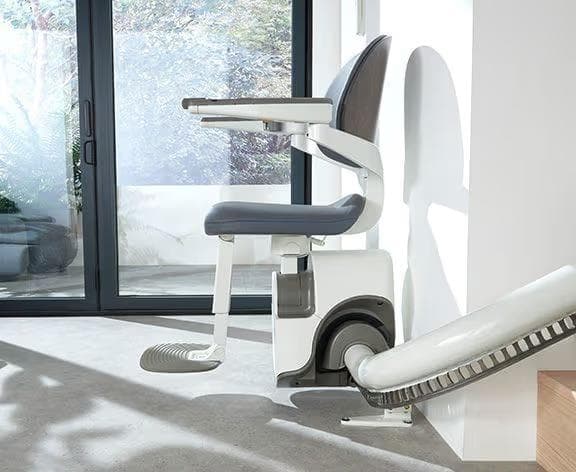
A stairlift travels along the staircase and suits single-floor mobility needs, starting at ₹13.41 lakhs. A home elevator serves all floors, carries up to 440kg, and starts from ₹14.50 lakhs. For multi-floor Indian homes with elderly parents, a home elevator delivers more long-term value and safety.
Your parent's doctor has said the stairs are no longer safe. Or perhaps it was a near-fall last month that settled the conversation. Either way, you know something needs to change — and you've narrowed it down to two options: a stairlift or a home elevator.
On the surface, the stairlift seems simpler. Cheaper, perhaps. Less civil work. Faster to install. But as you dig deeper, the questions multiply. What happens when your parents need to move between three floors, not just two? What if a wheelchair is eventually required? What about guests, groceries, and the rest of the family using the same stairs — with a rail running up the middle?
The decision between a home elevator vs stairlift is not simply about price. It is about what your family's needs will look like not just today, but five and ten years from now. This guide gives you the honest, practical comparison you need — using Elite Elevators' actual products and real pricing — so you can make the right choice with full confidence.
Understanding the fundamental difference between the two technologies clarifies everything that follows.
A stairlift is a motorised chair that travels along a rail mounted directly on the staircase. The user sits in the chair and is carried up or down the stairs. It does not require a separate shaft or major civil work — the rail is fixed to the existing stair structure. It is a mobility aid, designed to address the specific challenge of stair climbing for a single user.
Elite Elevators' E50 Stairlift is designed for both straight and curved staircases, offering a smooth, stable, and quiet ride with safety sensors, a swivel seat for easy boarding, and a remote control system. It is available for up to G+3 configurations.
Pricing for E50 Stairlift:
| Floor Configuration | Starting Price |
|---|---|
| G+1 | ₹13.41L |
| G+2 | ₹19.39L |
| G+3 | ₹26.87L |
| G+4 | ₹34.34L |
*Prices excluding taxes
A home elevator is a fully enclosed cabin that travels vertically between floors through a dedicated shaft or structure. It carries multiple passengers, accommodates wheelchairs, and serves every member of the household — not just the person with mobility needs.
Elite Elevators' X200 starts at ₹14.50 lakhs for G+1 — just ₹1.09 lakhs more than the E50 stairlift at the same floor configuration. From G+2 onwards, the price comparison shifts further in the elevator's favour.
The right choice depends on several factors specific to your family, your home, and your long-term outlook.
Your home has only two levels (G+1) and the mobility need is specific to one family member. The staircase is straight or gently curved with sufficient width for rail installation. The household budget is the primary constraint and a full elevator installation feels out of reach. The mobility need is expected to be temporary — a recovery period rather than a permanent condition.
The E50 is particularly suitable for elderly users who are mobile but find stair climbing fatiguing or risky — it provides independence without requiring assistance for every floor transition.
Your home has G+2 or more floors and mobility between all levels is a daily requirement. Any family member uses a wheelchair now or may in the future — stairlifts cannot accommodate wheelchairs without a transfer at top and bottom, which defeats the purpose for wheelchair users. Multiple family members need vertical access daily — the stairlift occupies the staircase rail and can disrupt normal stair use for the rest of the household. Your long-term plan includes the home serving the whole family for decades — an elevator adds resale value while a stairlift typically does not.
The price difference between the E50 stairlift and X200 elevator at G+1 is just ₹1.09 lakhs. At G+2, the E50 costs ₹19.39 lakhs while the X200 costs ₹16.50 lakhs — the elevator is actually cheaper. From G+2 onwards, the elevator consistently delivers more value per rupee spent.
Straight staircases in G+1 independent houses where the rail installation is straightforward. Narrow homes where creating a separate elevator shaft is genuinely not feasible. Heritage properties or older constructions where structural intervention needs to be minimised. Temporary accommodation for a recovering family member who will return to full mobility.
G+2 and G+3 independent villas and row houses where daily movement between all floors is required. Homes with elderly parents who have, or may develop, wheelchair dependency. Smart homes in Chennai's OMR corridor or Bangalore's Whitefield where technology integration is a priority. Luxury villas where aesthetics matter — a well-designed elevator cabin is an architectural feature, while a stairlift is a medical device on a rail.
One practical consideration specific to Indian homes: the stairlift rail occupies the staircase and can create friction in a multi-generational household where teenagers, adults, and domestic staff are all using the same stairs multiple times daily. A home elevator routes vertical traffic completely separately, leaving the staircase unobstructed.
The stairlift for elderly India market is real and growing — but stairlifts have structural limitations that become apparent over time.
Wheelchair incompatibility is the most significant. A stairlift carries a seated user between floors but cannot accommodate a wheelchair. If the elderly user's mobility progresses to wheelchair dependence, the stairlift becomes unusable and must be replaced — at significant cost. An elevator accommodates wheelchairs from day one and continues to serve the user regardless of how their mobility changes.
Single-user design limits utility. A stairlift is designed for one user with a specific mobility need. A home elevator serves the entire household — elderly parents, grandchildren, guests, and the practical daily needs of carrying groceries, luggage, and furniture between floors.
Resale value is another consideration. A well-specified home elevator from Elite Elevators adds measurable resale value to a property — particularly in the premium residential segments of Chennai, Bangalore, and Hyderabad where elevators are increasingly expected in G+2 and above homes. A stairlift, by contrast, is typically removed before a sale as it signals a specific medical need rather than a lifestyle upgrade.
Future-proofing is perhaps the strongest argument for the elevator. A home elevator installed today will serve the family for decades — through the elderly parent's lifetime, through the adult children's own ageing process, and potentially through the grandchildren's generation. The cost is incurred once. The value compounds over time.
The E50 Stairlift at ₹13.41 lakhs is the most accessible solution. If the parent is ambulatory and the staircase is suitable, this is a practical short-term answer.
The X200 elevator at ₹14.50 lakhs — just ₹1.09 lakhs more than the E50 — delivers a full elevator with 400kg capacity, ARD emergency rescue, and the ability to accommodate a wheelchair. The long-term value case for the elevator is compelling even at G+1.
The X200 at ₹16.50 lakhs is actually cheaper than the E50 at ₹19.39 lakhs — and delivers significantly more capability. At this floor configuration, the elevator wins on both price and value.
The X200 at ₹18.50 lakhs versus the E50 at ₹26.87 lakhs — the elevator saves ₹8.37 lakhs while delivering a full-cabin experience, wheelchair compatibility, smart feature options, and lifetime resale value. There is no reasonable case for a stairlift at G+3.
The X300 MK II Plus at ₹20.95 lakhs (G+1) adds biometric floor selection, Live SOS emergency alerts, EGSS zero-jerk technology, and VisionLog cabin camera — a comprehensive safety and smart living package that a stairlift cannot approach.
| Configuration | E50 Stairlift | X200 Elevator | Difference |
|---|---|---|---|
| G+1 | ₹13.41L | ₹14.50L | Elevator costs ₹1.09L more |
| G+2 | ₹19.39L | ₹16.50L | Elevator saves ₹2.89L |
| G+3 | ₹26.87L | ₹18.50L | Elevator saves ₹8.37L |
| G+4 | ₹34.34L | ₹24.70L (X300 MK II) | Elevator saves ₹9.64L |
(All prices are starting rates, excluding applicable taxes.)
The pricing comparison makes the case clearly: from G+2 onwards, a home elevator from Elite Elevators is not just more capable than a stairlift — it is less expensive.
Visit Elite Elevators' experience centre in Bangalore for a live demonstration. Experience the lifts, compare them, and make your decision with complete information.
For G+2 and above homes, a home elevator is better — it serves all floors, accommodates wheelchairs, doesn't obstruct the staircase, and from G+2 onwards is actually less expensive than a stairlift. The X200 elevator at ₹16.50L (G+2) is ₹2.89L cheaper than the E50 stairlift.
At G+1, the E50 stairlift starts at ₹13.41L versus ₹14.50L for the X200 elevator — a ₹1.09L difference. From G+2 onwards, the elevator is consistently cheaper. At G+3, the elevator saves ₹8.37 lakhs.
No. Stairlifts carry a seated user between floors but cannot transport a wheelchair. If wheelchair use is current or anticipated, a home elevator is the only suitable solution. Elite Elevators' cabins (1,200×1,200mm standard) comfortably accommodate wheelchair users.
A home elevator adds measurable resale value to a property and is increasingly expected in premium G+2 and above homes in India. A stairlift is typically removed before sale. From a property investment perspective, the elevator is significantly superior.
The E50 is appropriate for G+1 homes where budget is the primary constraint and wheelchair use is not anticipated. The X200 is superior in every functional dimension — it serves all floors, accommodates wheelchairs, leaves the staircase free, and is cheaper from G+2 onwards. For most Indian families, the X200 is the stronger long-term choice.
Anika is a Research & Development Specialist at Elite Elevators, India’s trusted brand for premium home elevator solutions. She specializes in residential elevator technology, space-efficient mobility solutions, and user-focused elevator innovations designed for modern Indian homes. Working closely with global engineering teams, Anika contributes to bringing advanced European elevator technologies to homeowners across India. Through her articles, she shares practical insights on home elevators, safety, design, installation, and smart mobility trends to help readers make informed decisions.


