Share
Save
Ready
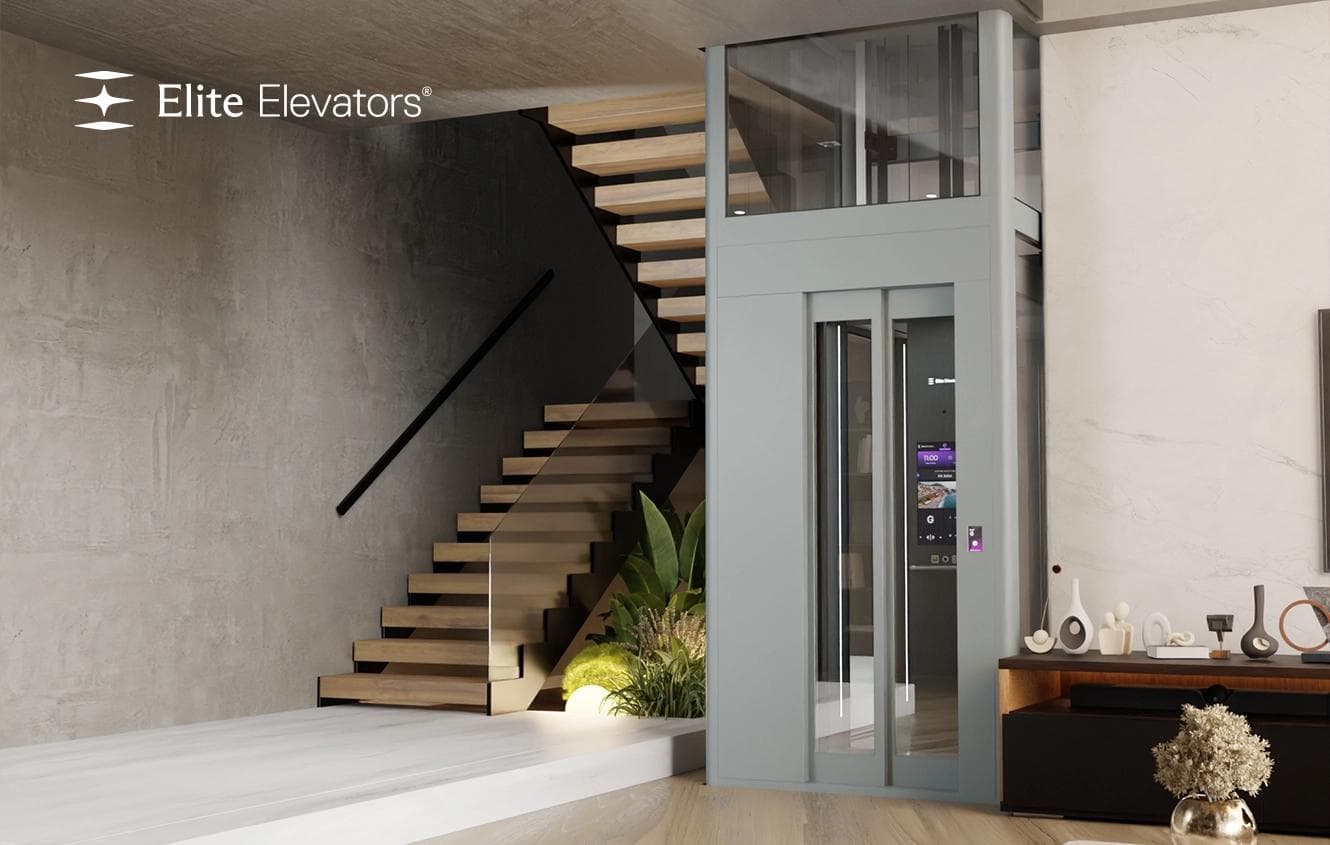
When Indian homeowners research home elevators for the first time, hydraulic technology appears in almost every conversation. Not by accident — hydraulic home lifts have been the dominant residential elevator technology in India for over a decade, and they continue to account for the majority of new installations across apartment buildings, independent villas, and multi-storey homes in Bangalore, Chennai, Hyderabad, and beyond.
But the conversation around hydraulic elevators is often shallow. Most information stops at "it uses fluid pressure" and "it is cheaper". Neither statement is fully accurate in 2026 — and neither comes close to capturing why hydraulic technology, in its modern form, continues to be the right choice for the majority of Indian residential elevator buyers.
This guide covers everything: what modern residential hydraulic elevators actually deliver, why their benefits have expanded significantly with recent engineering developments, and when hydraulic is — and is not — the right choice for your building.
The term "hydraulic elevator" covers a range of technologies. The hydraulic chain-drive system used in Elite Elevators' X200 and X200 Plus is meaningfully different from direct hydraulic systems of a decade ago – and those differences explain why the modern hydraulic residential elevator is a genuinely competitive product, not simply the budget option.
In a hydraulic chain-drive system, a hydraulic pump drives a chain that raises and lowers the cabin. This indirect mechanism eliminates the need for the hydraulic fluid to directly contact the cabin structure, reducing maintenance requirements and eliminating the oil contamination risk associated with older hydraulic designs. The system is self-contained, compact, and operates on single-phase power — directly compatible with standard Indian residential electrical connections.
The result: a smooth, quiet, reliable elevator that requires no machine room, starts on a 100 mm pit, and handles 400 kg across four floors with consistent performance over many years of daily use.
The hydraulic chain-drive mechanism produces significantly less vibration and noise than older traction or gear-drive systems. For residential buildings where the elevator shaft runs adjacent to bedrooms, living rooms, or study spaces, this acoustic quality is not a minor specification detail — it is the difference between an elevator the household forgets is running and one they are constantly aware of.
The Elite Elevators X200 and X200 Plus add EGSS (Extra Gentle Soft Start and Stop) technology to this inherently smooth drive mechanism — creating a ride that starts and stops in a progressive, imperceptible curve with zero jerk at both ends of every trip.
Traditional hydraulic systems required a machine room for the pump and controller — typically a separate space of 3–5 square metres adjacent to the shaft. Modern hydraulic residential elevators integrate all mechanical components within the shaft structure itself. No additional room. No lost living space. Clean, compact installation that works in Indian residential buildings of every size and layout.
The hydraulic chain-drive systems on the X200 and X200 Plus require just 100 mm of pit depth — shallow enough to accommodate in most existing Indian homes without breaking the floor slab. For apartment buildings and residential structures in Bangalore where structural modification is a concern, this specification is frequently the deciding factor.
Every hydraulic home lift in the Elite Elevators range operates on single-phase power — the standard domestic electrical connection in virtually every Indian residential building. No three-phase connection required. No application to the electricity board for a new connection. No infrastructure cost beyond a dedicated circuit from the existing panel.
Hydraulic residential elevators start from ₹14.50 lakhs (X200, G+1) — the most accessible entry point into genuine, certified home elevator quality in India. The X200 Plus at ₹16.75 lakhs adds smart features, including a 21-inch Live Board, Mobile App Connectivity, and PIN Restricted Floor Access. For Indian families who want real quality at an honest price, hydraulic chain drive remains the most compelling value proposition in the residential elevator market.
Standard cabin dimensions on the hydraulic range (1200×1200 mm for X200; 1400×1200 mm for X200 Plus) fit within the shaft spaces available in most Indian residential buildings — including apartment buildings, row houses, and independent villas with limited corridor width. The compact footprint, combined with the 100 mm pit and no machine room, makes hydraulics the most space-efficient residential elevator technology available for retrofit installations.
Hydraulic residential elevators from Elite Elevators include the full safety architecture as standard — ARD for power failures, door safety sensors, GSM emergency communication, Error Detection System (ENS) for real-time fault monitoring, overload alerts, and auto re-levelling. This is not a premium add-on. It is the baseline specification on every model.
Understanding the installation process helps residential building owners and homeowners plan accurately.
An Elite Elevators installation specialist visits the building, assesses shaft dimensions (or identifies the optimal shaft location), confirms pit feasibility (100 mm requirement for hydraulic models), checks headroom, evaluates door opening configurations, and verifies the electrical supply. This visit produces a specific installation plan and confirmed quote.
For buildings under construction, the shaft is built by the contractor to Elite Elevators' supplied dimensions — a masonry shaft that becomes part of the structure. For retrofit installations, the shaft can be built as a standalone structure within the available space with minimal disruption to the existing building fabric.
The hydraulic elevator components — cabin, doors, drive mechanism, and control system — are manufactured to the exact dimensions of the specific installation. This is not an off-the-shelf product adjusted on site. It is a custom-manufactured product built for the building.
For a building with a prepared shaft, hydraulic elevator installation typically completes in two to four days. The installation team manages the full process — drive mechanism, cabin assembly, door installation at every landing, electrical connection, and control system commissioning.
Every safety system is tested against the full safety protocol before the elevator enters service. Load testing, door sensor verification, ARD function test, GSM communication test, and levelling accuracy check are all completed and documented. The household or building manager receives full operational training before handover.
Hydraulic is the right choice when the building has up to 4 floors; daily usage is moderate to heavy; the budget sits below the gearless range; single-phase power is the available supply; and retrofit installation in an existing building is required.
Hydraulic may not be the right choice when the building has 5+ floors (gearless or cogbelt performs better at greater travel heights); a speed above 0.30 m/s is required (gearless delivers up to 1.0 m/s); or AI and biometric smart features are priorities (available on the gearless X300 range).
For the majority of Indian residential buildings—G+1 to G+3 homes, apartment buildings with 3–4 residential floors, and retrofit projects in existing structures—hydraulic chain drive remains the correct specification.
Modern hydraulic residential elevators deliver smooth quiet operation, single-phase power compatibility, no machine room requirement, a 100 mm shallow pit depth, a compact footprint, and a comprehensive safety suite — all from ₹14.50 lakhs. They are the most widely installed residential elevator technology in India for consistent, well-understood reasons.
The process covers free site surveys, shaft construction (if required), custom manufacturing, installation (2–4 days for a prepared shaft), and safety commissioning. Elite Elevators manages the full process with a certified installation team and provides household training before handover.
Yes – hydraulic chain-drive elevators are well suited to apartment buildings of up to 4 floors in Bangalore. Single-phase compatibility, no machine room, 100 mm pit depth, and compact footprint make them the most practical residential building elevator for buildings in the G+1 to G+3 range.
Hydraulic models (X200) are ideal for up to 4 floors, operate at 0.15–0.30 m/s, require no machine room, and start from ₹14.50 lakhs. Gearless models (X300 range) operate at up to 1.0 m/s, support 5+ floors, and offer AI, biometrics, and advanced smart features – at a higher price point. The right choice depends on floor count, performance requirements, and budget.
No — all Elite Elevators hydraulic models operate on single-phase power, which is the standard domestic connection in virtually every Indian residential building. No electrical infrastructure upgrade is required beyond a dedicated circuit from the existing panel.
Anika is a Research & Development Specialist at Elite Elevators, India’s trusted brand for premium home elevator solutions. She specializes in residential elevator technology, space-efficient mobility solutions, and user-focused elevator innovations designed for modern Indian homes. Working closely with global engineering teams, Anika contributes to bringing advanced European elevator technologies to homeowners across India. Through her articles, she shares practical insights on home elevators, safety, design, installation, and smart mobility trends to help readers make informed decisions.


